


How Much Does a Custom Mobile App Cost Per Year After Launch? Which Maintenance and Server Costs You Can't Skimp On
Custom mobile app development is not a one-time deal. After launch, you will incur ongoing costs every year. Based on 2026 project delivery habits, this expense is usually between 10%~25% of the development cost, depending on feature complexity, user volume, and iteration frequency. Many companies only focus on the initial development quote and ignore the total cost over the next two years, leading to budget overruns or unfinished projects. The following is based on enterprise-level app delivery experience, breaking down where this money goes, what can be saved, and what will cause trouble if you save it.
Where Does the Annual Maintenance Fee Typically Go? Three Areas
Contrary to what most people think, app expenses after launch are not a one-time payment. According to the common financial model for enterprise apps in 2026, the annual maintenance cost usually falls in the range of 10%~25% of the development cost. This range fluctuates greatly, but it can help you make a preliminary judgment. If it's below 5%, it's basically only enough for bug fixes; if it's above 30%, it may indicate overly frequent feature iterations or architectural design issues.
- Servers and basic resources: Including cloud servers, cloud databases, CDN, and object storage, billed monthly or annually. The typical range is thousands to tens of thousands of yuan per year, depending on user volume and data volume.
- Third-party service subscriptions: SMS verification codes, push services, map SDKs, payment channels, etc., billed by usage. Some services may transition from free quotas to paid bills as user volume grows.
- Manual maintenance and iteration: Development personnel billed by hour or person-day, used for bug fixes, version adaptation, and small feature iterations. The typical range is thousands to tens of thousands of yuan per month.
Which Costs Can't You Skimp On? What Are the Consequences?
Saving costs needs to be targeted; some expenses, if you save on them, will plant landmines. In a 2026 same-city delivery project, the client chose the lowest-configuration cloud server to save a few hundred yuan per month. After launch, every promotional event caused timeouts, and eventually an emergency scale-up cost several thousand yuan and delayed the launch by two days. This price was far greater than the money saved.
- Server elasticity: Don't buy a fixed configuration; you need elastic scaling capability. If it can't handle peak loads, it will fail you, and the loss of brand reputation is unquantifiable.
- Security and backups: Domain registration, SSL certificates, and data backups are the bottom line. In 2026, compliance requirements for cybersecurity are stricter, and fines and compensation for data breaches can far exceed maintenance fees.
- Legitimate third-party service licenses: Some SDKs have commercial licensing requirements. Using cracked or unauthorized integrations can lead to app removal and legal risks.
- Version adaptation and real-device testing: If you don't test on older models and new OS versions, the crash rate will rise, and losing users will be harder to recover.
Which Costs Can Be Saved? How to Save Without Pitfalls
The right way to save money is not to cut features, but to cut redundant development. We recommend using the "Four-Dimensional Evaluation Method" to decide whether each feature is worth the initial investment. This method has helped clients reduce the initial cost by about 20% in multiple projects without affecting future expansion.
- Usage frequency: Does the target user really use this feature often? Features used less than once a year can be postponed.
- Replacement cost: Is there an existing third-party SDK or mini-program that can achieve this? If the outsourcing development cost is far higher than the annual subscription fee, prioritize using existing solutions.
- Need for validation: Is this feature for validating the business model or for completeness? If it's for validation, keep it minimal and only retain the core loop.
- Data value: What data can it collect, and is it useful for future operations? If the data value is unclear, you can add it later.
These four steps should be prioritized in order; don't reverse them. A common counterexample is cutting the core transaction process to save money, resulting in users being unable to place orders, and the saved money is all lost on customer acquisition.
How to Judge Whether a Maintenance Fee Quote Is Reasonable
According to Xiyue Company's delivery habits, when clients receive a maintenance quote, they should not only look at the total price, but also at the boundaries. We commonly see two types of quotes: one that only includes bug fixes, and one that includes minor iterations and server management. According to the 2026 market conditions, the former is usually 5%~8% of the development cost per year, while the latter is 8%~15% per year. If the quote exceeds 25%, you need to confirm whether it includes a large number of new features.
- Basic maintenance package: Only bug fixes, no new features, typical range 5%~8% of development cost per year.
- Standard maintenance package: Bug fixes + adaptation to new systems + minor optimizations, typical range 8%~15% per year.
- Including feature iteration: Includes a certain number of person-days for new feature development on top of the standard package, typical range 15%~25% per year.
- Full management: Includes server maintenance, monitoring, customer support, etc., may charge server fees separately, typical range 20%~30% per year.
To judge whether a quote is reasonable, you should also ask three things: Does it include third-party service payments? Is there a response time commitment? Does it include emergency fixes at night and on holidays? The answers to these questions directly determine whether the quote is reasonable.
Applicable Scenarios and Boundaries
Continuously investing in maintenance fees is suitable for businesses that have stable users and where revenue can cover costs. If the app is still in the validation phase, or the business focus has shifted to mini-programs, it is recommended to freeze the version and only do security patches, without investing in feature iterations. According to common practices in 2026, if the app's retention rate within six months is below 5%, it may not be a maintenance issue but a product positioning issue, and investing more in maintenance at that point is wasteful.
- Suitable for: Businesses with active users, paid conversions, and long-term operational needs.
- Not suitable or unnecessary: Trial or event-based apps that are abandoned after the event; business needs that can be covered by mini-programs with lower customer acquisition barriers; budgets are limited and short-term profitability is unlikely, so MVP validation can come first.
FAQ
Can maintenance work be done by hiring in-house? Which is more cost-effective compared to outsourcing?
If the monthly maintenance workload is stably above 20 person-days, building an in-house team may be more cost-effective; if it's below 10 person-days, outsourced maintenance is more hassle-free. In 2026, recruitment and management costs are high, so don't just look at salaries.
Which cloud service provider is good for servers? How to choose to save money?
In the early stage, choose lightweight application servers with pay-as-you-go billing, and don't buy high-configuration annual plans from the start. Focus on bandwidth and database performance, as well as coverage of major user regions.
Why is the server still so expensive when the app has few users?
You may have purchased annual fixed bandwidth instead of pay-as-you-go. In 2026, cloud vendors generally support elastic scaling. It's recommended to release unused resources and keep only the basic configuration.
Which clauses must be clearly stated in the maintenance contract?
Response time, repair deadlines, whether new system adaptations are included, whether third-party services are managed, and whether code and documentation are transferable. If these aren't clear, disputes are likely later.
Calculate the total cost over two years before making a decision. If your app has a stable 1000 daily active users and a paid conversion rate above 2%, maintenance investment is usually worth it; if the data doesn't meet these criteria, don't rush to optimize features—go back and review the needs and scenarios. Use the "Four-Dimensional Evaluation Method" to go through it, save what can be saved, and don't hesitate on what can't be saved. When there's a dispute, pull out the maintenance boundaries in the contract and check them one by one.
-
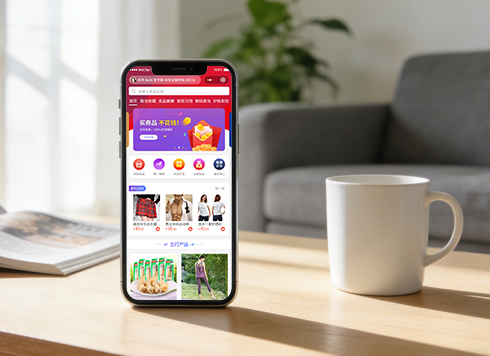 Well-Recognized Custom E-Commerce Mall System Dev
The Good Shopping mini-app is natively buil ...
-
 Anhui Huixiang Vegetable Garden Agricultural Products Mini Program v2.0 Iteration Development
HuiXiang MiniApp V2.0: Upgraded homepage, n ...
-
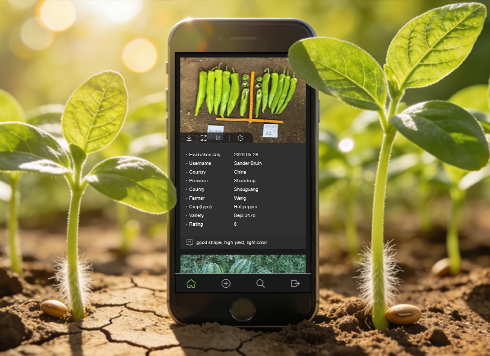 Kunshan TrialBook Mini-Program Custom Development
This project developed an English-only Tria ...
-
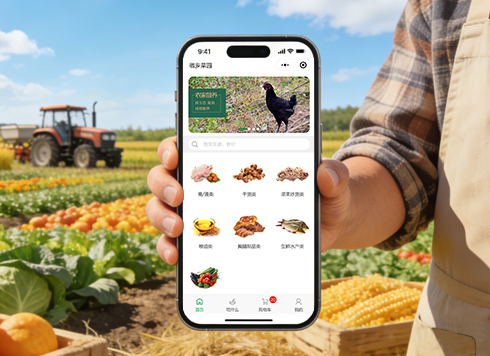 Agricultural Products WeChat Mini Program Custom Development
Lvran Di enhances agricultural sales via a ...
-
When users enter a shipping address and the keyboard pops up, the submit button can't be tapped: should you change the page structure or the input component first?
Date: Oct 14, 2026 Read: 7
-
After building an app with a cross-platform framework, Android colleagues say list scrolling feels rough and iPhone colleagues say swipe-back is unreliable: should we change the framework first or patch platform adaptation first?
Date: Oct 13, 2026 Read: 12
-
User-uploaded video plays on iPhone but some Android phones show only audio, no picture: does asking the user to re-record help first?
Date: Oct 12, 2026 Read: 17
-
Company Bluetooth device is discoverable on a colleague's phone but not on my new phone — what should I check first?
Date: Oct 11, 2026 Read: 23
-
Users say the app keeps asking them to rate and they just tap one star — is it safer to remove the rating entry?
Date: Oct 10, 2026 Read: 36