




Which Businesses Can Just Build a Mini Program Without an App in 2026?
In 2026, when building mobile software, the core decision between starting with a mini program or directly developing an app is not about development difficulty, but two questions: whether users will open it frequently, and whether the business needs to invoke deep system capabilities of the phone. If both answers are "no", a mini program is usually sufficient; if either is "yes", then an app is worth the investment. The three-round screening method below turns this dilemma into executable decisions.
Why Does This Choice Need Re-evaluation in 2026?
By 2026, the mini program ecosystem has become quite mature. Common capabilities such as payment, live streaming, maps, and customer service all have ready-made components, and many businesses can run their "mobile end" with just a mini program. Meanwhile, the labor cost of app development and the high barriers for app store listing have not decreased significantly, while the cost of user acquisition through downloads continues to rise.
However, many teams still habitually build an app first, citing reasons like "everyone has an app" or "a mini program doesn't look professional enough." Based on 2026 project delivery practices, we more often recommend clarifying the business model first. A mini program is not a substitute for an app, but a lower-cost validation vehicle. Breaking down the question "is an app really necessary" into three rounds of screening can avoid investment mistakes.
- Mini programs are suitable for validating demand; apps are suitable for scaled operations.
- Platform rules are still changing in 2026, and the capability boundaries of mini programs should be checked against the latest official documentation.
Three-Round Screening Method: Decide Between Mini Program and App
The three-round screening method breaks the business into three layers, each asking one question. For each round, you must clearly state the reason for answering "yes" or "no." This makes the judgment much more reliable than guessing.
- Round 1: User usage frequency and scenarios—Will users open it every week? If only occasionally, a mini program is sufficient; an app is more likely to be uninstalled in the first cleanup.
- Round 2: Dependency on phone hardware capabilities—Do you need system-level push notifications, Bluetooth, NFC, background location, or full photo album access? Mini programs have limited support for some capabilities; apps are more stable.
- Round 3: Business model's need for an independent ecosystem—Do you need to accumulate members, handle offline processing, customize sharing links, or avoid platform commission? An app gives you more control.
If all three rounds are "no," you basically don't need an app; if two rounds are "yes," an app is worth building; if all three are "yes," you need to seriously plan the app. Note that the third round is often more critical for large platform-type businesses, but it also brings higher development and operational costs.
When Is It Worth Upgrading from a Mini Program to an App?
Not all businesses need to build an app from scratch. In 2026, a common approach is to run a mini program first and upgrade after data validation. However, there are trigger signals for an upgrade; it is recommended to proceed only when at least two of the following are met.
- Users open the mini program more than 3 times per week, and the first-screen loading time begins to affect the experience.
- You need system-level push notifications to bring users back, and mini program subscription messages cannot cover key scenarios.
- You need Bluetooth or NFC interaction with hardware devices, and mini program compatibility is not stable enough.
- You need offline availability or complex local computation; an app is a more suitable carrier.
A counterexample is rushing to an app before the business model is validated, resulting in hundreds of thousands of RMB spent on development while the user base cannot support the maintenance costs. In our projects, we have seen many clients first build an app and then have to add a mini program later, doubling the investment. Conversely, those who start with a mini program and upgrade later at least don't have to overturn all the business logic.
Cost, Cycle, and Risk: A Structured Comparison of Mini Program vs App
The following are experience ranges based on 2026 project delivery practices. Actual figures may vary with functionality and design requirements, but they generally serve as a budget reference.
- Development cycle: Mini programs typically take 4-8 weeks; native dual-platform apps typically take 12-24 weeks, cross-platform frameworks may be slightly shorter but still require compatibility testing.
- Development budget: Mini programs typically range from 50,000 to 150,000 RMB; dual-platform apps typically range from 200,000 to 500,000 RMB, including APIs and admin backend.
- Listing and review: Mini programs go through faster platform review; apps must pass app store review, and getting stuck due to qualification or compliance issues is common.
- System permissions: Mini programs have limited support for Bluetooth, background location, and notification permissions; apps have almost full access.
- Acquisition and retention: Mini programs rely on QR codes and sharing; apps require downloads, but a desktop icon can increase return visits.
The cost of an app mainly lies in double development costs and higher listing risks. When budget is tight, starting with a mini program is a safer path.
Applicable Scenarios and Boundaries: When You Need Neither a Mini Program Nor an App
Some businesses actually don't need to develop any "mobile software." For example, one-time offline event registration, internal form collection, or simple promotional pages can be handled by ready-made H5 or third-party form tools; building an app or mini program would be a waste.
- Suitable for mini programs: Low-frequency but entry-fixed businesses, such as appointment services, membership cards, and simple online stores.
- Suitable for apps: High-frequency use, strong user stickiness, or businesses needing hardware capabilities or an independent ecosystem, such as tool apps, social apps, and IoT control apps.
- Not suitable for any custom development: Event pages, surveys, and extremely low-frequency appointments — using ready-made tools is more cost-effective.
The boundaries should be clear: Mini programs are not suitable for large games or high-precision real-time interactions; apps are not suitable for early-stage projects with limited budgets and unvalidated user bases. The criterion is "how many times users are willing to open their phones for this feature."
Common Pitfalls and Acceptance Criteria
A pitfall that is easily underestimated is treating a mini program as a "mini version of an app," designing it hastily, and later finding that the code cannot be reused when upgrading to an app. Another pitfall is not defining the minimum compatible version before development, leading to constant rework for older devices during the testing phase.
In our projects, we have seen clients spend over a hundred thousand RMB on an app first, but promotion didn't keep up, and they ended up only keeping the mini program. There were also cases where a mini program was built first, and after validation, it was upgraded to an app, with a much lower overall rework rate. Once, because a client required compatibility with very old mobile operating systems, the front-end style had to be adjusted repeatedly, adding nearly two weeks to the schedule. After that, we made it a rule to specify the minimum OS version in the contract before acceptance. This habit has saved many subsequent clients from unnecessary expenses.
- Have a clear version compatibility matrix; do not claim full compatibility.
- Every core feature must have acceptance test cases; do not rely solely on manual visual checks.
- Deliver a runnable environment and basic training, not just code.
Frequently Asked Questions
Can a Mini Program Be Directly Converted into an App After Development?
It cannot be directly converted, but some backend APIs can be reused. The front-end code of a mini program differs from an app; choosing a cross-platform framework can reduce migration costs, but there is no one-click conversion.
Does Choosing Native or Cross-Platform Development Affect Future Upgrades?
Yes, significantly. Cross-platform frameworks (such as Flutter and React Native) allow one codebase to be reused on both platforms, but deep system interactions still require native bridges. When choosing, first clarify the capability boundaries.
Will Building a Mini Program First Waste Previous Development Costs?
As long as the backend APIs are well-designed, the business logic validated in the mini program can be retained and will not be entirely wasted when upgrading to an app. The key is to properly structure the database and APIs in the early stage.
Which Industries Are More Suitable for Building Only a Mini Program?
Low-to-medium-frequency local life services, appointment & consultation, e-commerce, and content display businesses are more suitable. Those that require hardware interaction, offline storage, or highly sticky operations are not suitable for a mini program alone.
First, use the three-round screening. If the weekly open rate is under 3 times, no hardware capabilities are needed, and no independent ecosystem is required, build a mini program first. As long as any two of these criteria point to the opposite (i.e., high frequency, hardware needs, or ecosystem dependency), you can seriously plan an app. This framework still applies in 2026, but when hardware integration or large-scale systems are involved, a separate assessment is still needed.
-
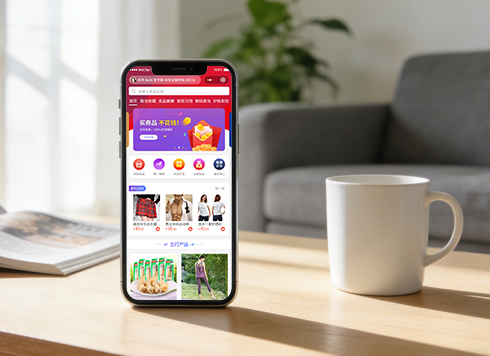 Well-Recognized Custom E-Commerce Mall System Dev
The Good Shopping mini-app is natively buil ...
-
 Anhui Huixiang Vegetable Garden Agricultural Products Mini Program v2.0 Iteration Development
HuiXiang MiniApp V2.0: Upgraded homepage, n ...
-
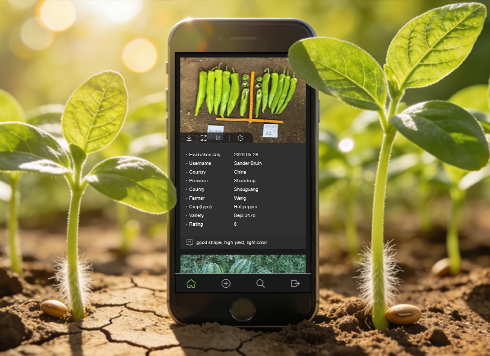 Kunshan TrialBook Mini-Program Custom Development
This project developed an English-only Tria ...
-
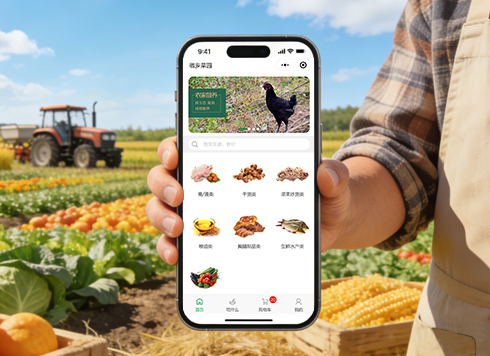 Agricultural Products WeChat Mini Program Custom Development
Lvran Di enhances agricultural sales via a ...
-
When users enter a shipping address and the keyboard pops up, the submit button can't be tapped: should you change the page structure or the input component first?
Date: Oct 14, 2026 Read: 7
-
After building an app with a cross-platform framework, Android colleagues say list scrolling feels rough and iPhone colleagues say swipe-back is unreliable: should we change the framework first or patch platform adaptation first?
Date: Oct 13, 2026 Read: 12
-
User-uploaded video plays on iPhone but some Android phones show only audio, no picture: does asking the user to re-record help first?
Date: Oct 12, 2026 Read: 17
-
Company Bluetooth device is discoverable on a colleague's phone but not on my new phone — what should I check first?
Date: Oct 11, 2026 Read: 23
-
Users say the app keeps asking them to rate and they just tap one star — is it safer to remove the rating entry?
Date: Oct 10, 2026 Read: 36