




App is developed but cannot be listed, the outsourcing company says it's fine, but your own submissions keep getting rejected—where is the bottleneck?
App development is not equivalent to listing: what the review checks
According to the review habits of various app stores in 2026, completing App development is only the first step. Whether it can be listed depends on account qualifications, content compliance, and technical configuration. Many teams equate "development complete" with "can be listed," and end up being repeatedly rejected after submission. From our experience in mobile delivery, review bottlenecks are usually not functional issues but incomplete release preparation.
- Account entity: The types of apps that individual developers and enterprise developers can list differ. Categories involving payment, social networking, news, etc., usually require enterprise qualifications;
- Software copyright and filing: Most domestic Android stores require a software copyright registration certificate. Time should be reserved before listing. Routine processing typically ranges from 20 to 40 working days;
- Privacy compliance: The privacy policy link, permission descriptions, and user consent pop-up must be consistent. Any discrepancy will require rectification;
- Signing certificate: Signature requirements vary among stores. Using the wrong certificate can result in rejection or inability to update the installation package.
Two delivery sites: one stuck on software copyright, one stuck on privacy pop-up
In project delivery, we often encounter two types of rejections: one is that the functionality is complete but the software copyright is still in progress, so the app cannot provide qualifications during app store queue review; the other is that the wording in the privacy pop-up and privacy policy does not match store requirements, requiring rectification and resubmission. Both types are not difficult to solve, but they significantly delay the launch time.
Site 1: Software copyright not applied for in advance, launch date delayed by more than a month
There was an e-commerce project with a 3-month development cycle, and the software copyright application was not started until the 10th week. As a result, after the app store preliminary review passed, the app was removed due to missing software copyright. After completing the qualifications and resubmitting, it took more than 30 extra days. The constraints are clear: software copyright processing has a fixed cycle, typically 20 to 40 working days; if expedited, it can be shortened to 5 to 10 working days, but the cost doubles. The approach is to apply for software copyright in the first week of project initiation, rather than waiting until near completion. The cost of this lesson was that the operational schedule shifted backward, and the promotion plan had to be rearranged.
Site 2: Permission pop-up did not clearly state the purpose, required rectification and re-queued
Another content community App placed the privacy policy link in "Settings" during development, and the first-launch permission pop-up only asked for camera permission without stating its purpose. The store review pointed out that "the permission usage scenario was not explained in the pop-up" and required modification before resubmission. The modification itself took only half a day, but re-queuing for review took another 5 to 10 working days. The correct approach is to state the purpose directly in the permission pop-up, such as "used for taking profile photos," and place the complete privacy policy in a location users can access at any time.
Pre-listing self-check checklist: checking against it can reduce one rejection
Instead of waiting for review results to make changes, it is better to check item by item before submission. Based on our project delivery habits, we have compiled a "three-step pre-listing check method" covering account, package, and content.
- Check account and qualifications: Confirm whether the developer account entity meets the target store's category requirements, and whether software copyright and filing have been completed and can be queried on the official website;
- Check installation package and signature: Use the official signing tool to generate a certificate, confirm that the package name, version number, and signature are consistent with the backend, and do not use test signatures as official ones;
- Check privacy and user notification: Verify that the privacy policy link is accessible, the first-launch pop-up includes "agree" and "disagree" options, and the purpose of each permission is clearly stated.
Passing these three steps does not guarantee successful listing, but it can filter out most common reasons for rejection. Based on experience, after these three checks, the first-submission pass rate can significantly improve, and the number of rework cycles can decrease from the typical 2 to 3 times to 0 to 1 time.
Don't panic after rejection: determine the reason before deciding whether to modify or appeal
When you receive a rejection email, don't rush to modify. Follow the three steps of "determine the reason—decide the path—fix and resubmit." Some rejections are due to app store policy updates, such as narrowing permission usage scenarios. These are not your problem; you can appeal or provide supplementary explanations as prompted. Some are due to functionality not matching the description, requiring modification of the app or description before resubmission. A practical criterion is: if the rejection reason mentions a specific violation clause, modify directly according to the clause; if it just says "suspected confusion" or "not passed," prepare supplementary explanation materials before resubmitting.
In projects, the most common rejection we encounter is the "2.1 big package" type—where the store lists multiple issues at once. In this case, reply to each point and explain the modifications for each, rather than just writing "fixed" without providing details; otherwise, it is easy to fall into a cycle of "slow response" and the review period may extend to 2 to 4 weeks.
Software copyright and filing: two qualifications that easily slow progress
Software copyright and ICP filing are two different things but are often confused. Software copyright is a copyright certificate used to prove that you own the rights to the app's code and documentation; filing is the service filing required by the Ministry of Industry and Information Technology for websites and apps. Domestic Android stores usually require software copyright before listing, while iOS listing does not mandate software copyright, but the review checks copyright statements.
According to the typical processing range in 2026, software copyright from submission to publication takes 20 to 40 working days, and expedited processing can be shortened to about 5 working days; ICP filing takes 1 to 20 working days, depending on the province and materials. It is recommended to prepare these two items in the first week of project initiation, not at the late stage of development. Otherwise, the launch date will likely be delayed by one to two months.
Comparison: paid listing service vs. self-listing, what's the difference
Many teams struggle with whether to pay for a listing service. From the comparison in project delivery, the main differences are cost, cycle, risk, and applicable audience.
- Cost: Self-listing only requires the developer account fee, typically about $99/year for individuals and about $299/year for enterprises; paid listing services typically quote from several thousand to tens of thousands of yuan, depending on the complexity of qualifications;
- Cycle: Self-listing is affected by review queues, with first submission typically taking 1 to 7 working days; paid listing services, being familiar with store rules, may reduce one rejection, but the overall cycle is similar and will not save much time;
- Risk: If a paid listing service uses someone else's account or non-compliant channels, there is a risk of subsequent delisting; self-listing gives you direct control of the account, but you need to handle rejection feedback yourself;
- Applicable audience: For projects with a technical team or product manager, self-listing is recommended; for pure business parties unfamiliar with review rules, a paid listing service may be considered, but you should verify the provider's successful cases and operation methods.
Applicable scenarios and boundaries: when to prioritize listing issues
The above content is suitable for the following situations: the App has been developed and you are preparing to submit to the app store; or after rejection, you want to systematically troubleshoot the reasons. It is not suitable if you are still in the requirements stage; listing issues can be handled later in development—but software copyright application and filing should be started early. In addition, if your app involves special industries such as medical, finance, or education, additional industry qualifications are required before listing. For example, medical-related requires the Internet Drug Information Service Qualification, and financial-related requires a financial license or filing. You cannot rely only on the general preparation mentioned in this article. It is recommended to confirm your business category first, then decide whether special qualifications are needed.
FAQ
Can an individual developer account list all types of apps?
No. According to common rules of domestic app stores, categories involving payment, social networking, news, etc., usually require an enterprise developer account, and individual entities face more review restrictions.
How long does software copyright processing take? Is expedited processing reliable?
Routine processing takes 20 to 40 working days, and expedited processing can be shortened to 5 to 10 working days, but the cost is higher. It is recommended to apply early based on the project schedule to avoid extra costs for rush launch.
Is there a big difference between Android and Apple store reviews?
Yes, quite big. Android stores place more emphasis on filing, software copyright, and permission compliance; Apple is stricter about UI design, user privacy, and in-app choice. It is recommended to prepare for both simultaneously and not modify according to only one standard.
Can I use a paid listing service? What are the risks?
You can use it, but there are qualification thresholds. Paid listing services usually require you to provide materials such as software copyright and business license, and essentially they still submit using the enterprise entity. If a provider promises "guaranteed pass without software copyright," it is likely a risky channel that may lead to delisting later. It is recommended to self-check according to official procedures.
First go through the "three-step pre-listing check method": account qualifications, package signature, and privacy notification. If you find that software copyright is not yet processed, the signature is incorrect, or the privacy policy is missing, fill the gaps in priority order and resubmit. If you have been rejected multiple times, organize the reasons for each rejection, modify according to the clauses, and reply to each point. If you are still unsure, you can list the required materials and check them item by item against the store's official policies.
-
 Well-Recognized Custom E-Commerce Mall System Dev
The Good Shopping mini-app is natively buil ...
-
 Anhui Huixiang Vegetable Garden Agricultural Products Mini Program v2.0 Iteration Development
HuiXiang MiniApp V2.0: Upgraded homepage, n ...
-
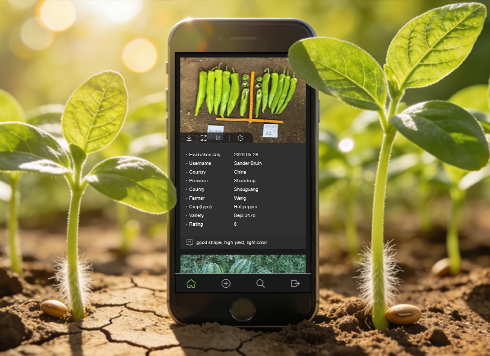 Kunshan TrialBook Mini-Program Custom Development
This project developed an English-only Tria ...
-
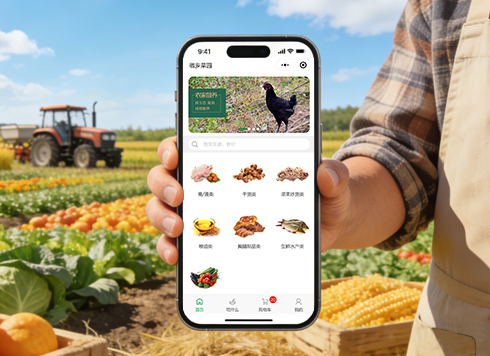 Agricultural Products WeChat Mini Program Custom Development
Lvran Di enhances agricultural sales via a ...
-
Custom mobile app development done but can't be listed? What review requirements usually block it?
Date: Sep 2, 2026 Read: 100
-
When users enter a shipping address and the keyboard pops up, the submit button can't be tapped: should you change the page structure or the input component first?
Date: Oct 14, 2026 Read: 7
-
After building an app with a cross-platform framework, Android colleagues say list scrolling feels rough and iPhone colleagues say swipe-back is unreliable: should we change the framework first or patch platform adaptation first?
Date: Oct 13, 2026 Read: 12
-
User-uploaded video plays on iPhone but some Android phones show only audio, no picture: does asking the user to re-record help first?
Date: Oct 12, 2026 Read: 17
-
Company Bluetooth device is discoverable on a colleague's phone but not on my new phone — what should I check first?
Date: Oct 11, 2026 Read: 23