Mobile App Custom Development: Should You Get the Source Code? What Are the Risks of Not Getting It?
For custom mobile app development, you must obtain the source code. Custom development without the source code is essentially "paying for customization but renting the skin of the software." According to project delivery practices in 2026, a proper outsourcing contract should include source code delivery, though some teams list it as a separate item in the quote. Whether you get it, and how much you get, determines whether you'll be passive or active later. The judgment is simple: if you plan long-term operation and iterative updates, you must get the source code; if it's just a temporary campaign, using a mini-program platform is more appropriate.
Why Source Code Delivery Is the Watershed in Custom Development
The source code is the "property deed" of your app. With it, you have the right to modify the product—whether switching development teams, fixing bugs, or adding new features—you can control everything yourself. Without it, you can only work through the original developer; whatever they quote and however long they schedule, you have little room to negotiate. In 2026, many app bug fixes are delayed waiting for the outsourcing team's availability, precisely because the source code was not obtained.
- Maintenance rights: Only with the source code can you modify it yourself; otherwise, you must rely on the original team, or even accept outdated technology.
- Property security: The code often contains API keys and business logic; not getting it is equivalent to having your trade secrets hosted elsewhere.
- Handover cost: When changing teams, an app with source code is an asset; one without it is a liability, often requiring a complete rewrite.
How to Decide Whether to Get the Source Code: Start with These Three Dimensions
Not all projects are worth agonizing over the source code. To balance cost and long-term value, I recommend using the "three-dimensional judgment method" to quickly filter: budget, technology stack, and operation cycle.
- Budget: Getting the source code typically costs more than receiving only the installation package. The experience range is 10%–20% of the original quote, covering the labor for organizing comments, writing documentation, and configuring the environment. If your budget allows, get it. If the quote is so low that even servers are cut, you likely won't get the complete source code.
- Technology: Check whether the tech stack is mainstream. For common stacks like Flutter, React Native, or native development, you can find people to maintain the code once you have it. If the outsourcer uses a proprietary framework, the source code will be hard to use even if you get it. In that case, it's better to require "deliver key modules in standard format."
- Operation: If you plan to operate for over 3 years, you must get it. For a limited-time campaign of 1-2 months, obtaining the source code has no practical meaning and adds storage costs. However, even for temporary projects, it's advisable to include source code in the contract as an acceptance backup.
What counts as qualified? At the very least, you should have a clear reason for your "yes or no" answer, rather than being brushed off by the developer's words. If two of the three dimensions point to "yes," then don't give it up.
Source Code Delivery Acceptance Checklist: The Four-Step Verification Method
Simply asking for the source code is not enough; you must also know how to accept it. Many teams deliver by just providing a git URL and calling it done, but it's common to find that the code doesn't run, can't be integrated, or is missing dependencies. The following checklist is a verification method commonly used in our 2026 projects; you can check each item accordingly.
- Verify deliverable completeness: In addition to the source code, readable comments, dependency lists, environment configuration files, database scripts, and third-party platform accounts must be included. Missing any item means incomplete delivery.
- Verify reproducible build: Have the developer compile the installation package from source code in a clean environment on your side. Also, following app store submission guidelines, confirm that you can re-sign and upload under your own account. If you can't get past this step, the source code is incomplete.
- Check documentation and operations design: At a minimum, there should be a deployment manual, API documentation, and common command descriptions; otherwise, the engineers taking over will have to guess.
- Confirm ownership: The contract must state that "copyright and usage rights belong to the client," and specify the delivery format and time of the source code. This step is easy to miss but crucial.
In projects, I have encountered clients who only ran the demo version during acceptance without verifying the source code. When it came time to launch, they discovered the outsourcer had not transferred the signing certificate, making it impossible to publish the app on the app store. It took another two weeks to get the original team to provide the missing materials. This is the cost of not verifying the "reproducible build."
Comparison of Options: Full Delivery vs. Black-Box Delivery vs. Source Code Plus Documentation
Different delivery forms affect the subsequent operation rhythm and maintenance costs. Here is a direct comparison based on the common categories in 2026 contracts:
- Full delivery (source code + documentation + deployment): More complete rights; you can iterate and change suppliers yourself. The cost is generally 10%–20% higher, suitable for long-term, core-business apps.
- Black-box delivery (installation package only): Sells only the product, not the underlying technology. Lower cost and shorter cycle, suitable for validating an idea, but every future change depends on the original developer.
- Source code + deployment, but no documentation: Looks like you have the source code, but maintainability is poor; after changing teams, it almost equals a rewrite. Suitable for small and medium teams that have internal senior employees who can read the code.
If the developer uses "the source code would leak technology" as an excuse, you can basically confirm that they lack solid technical foundation. According to industry practices in 2026, source code delivery is a standard feature of custom development, not an option.
Applicable Scenarios and Boundaries: Which Projects Don't Need to Worry About Source Code
In the following situations, you can let go of the obsession with source code: quick-validation campaign pages, one-off tools with a finite lifecycle, and "half-finished" projects with budgets below the regular level. In these scenarios, even if you get the source code, your operational capabilities may not keep up, and it only increases decision costs.
Conversely, as long as you have any of the following needs—planning long-term operation, wanting to control the update rhythm yourself, needing third-party audits, or handling sensitive data—you must lock the source code in the contract. There is no middle ground.
Frequently Asked Questions
Can I have someone else modify the app later if I don't get the source code?
Basically no. Once the original team owns the code, others would need to reverse-engineer or rewrite it, which is time-consuming and costly—often exceeding the original quote.
How can I tell if the source code provided by the developer is complete?
Use the reproducible build step from the "Four-Step Verification Method." If you can compile a runnable installation package from scratch, it's complete.
Is it reasonable to charge extra for source code delivery?
If the quote already includes the source code, charging extra is unreasonable. If the contract specifies per-function pricing, the extra charge is normal, with an experience range of 10%–20% of the original quote.
Without the source code, does the intellectual property belong to me?
Copyright goes to the developer by default unless the contract specifically assigns ownership. Even if you've paid, you only have usage rights.
Is source code from cross-platform development more valuable?
Not necessarily; it depends on code quality and comments. Mainstream tech stacks are easier to find maintainers for, but ultimately it comes down to whether you can get the build to pass.
First, check the "deliverables" section of your contract, include the words "source code," and require four supporting items: comments, documentation, build scripts, and an account list. Then perform a clean-environment compilation test. If your project is for short-term validation, you don't need to insist, but for long-term projects, you should never compromise. What you fail to obtain is often not a technical issue, but an ownership issue.
-
 Well-Recognized Custom E-Commerce Mall System Dev
The Good Shopping mini-app is natively buil ...
-
 Anhui Huixiang Vegetable Garden Agricultural Products Mini Program v2.0 Iteration Development
HuiXiang MiniApp V2.0: Upgraded homepage, n ...
-
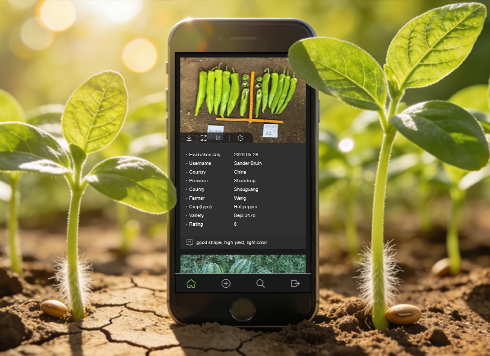 Kunshan TrialBook Mini-Program Custom Development
This project developed an English-only Tria ...
-
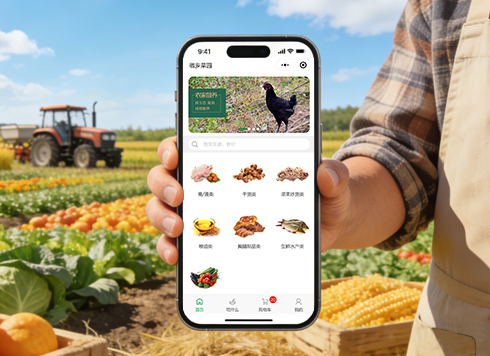 Agricultural Products WeChat Mini Program Custom Development
Lvran Di enhances agricultural sales via a ...
-
Adding Features to an Old App: Outsourcer Says It Needs a Rewrite and Double the Cost — Is It Worth It?
Date: Sep 1, 2026 Read: 172
-
Rebuild or Patch an Old App? Where Do the Cost Differences Lie?
Date: Aug 24, 2026 Read: 161
-
When users enter a shipping address and the keyboard pops up, the submit button can't be tapped: should you change the page structure or the input component first?
Date: Oct 14, 2026 Read: 7
-
After building an app with a cross-platform framework, Android colleagues say list scrolling feels rough and iPhone colleagues say swipe-back is unreliable: should we change the framework first or patch platform adaptation first?
Date: Oct 13, 2026 Read: 12
-
User-uploaded video plays on iPhone but some Android phones show only audio, no picture: does asking the user to re-record help first?
Date: Oct 12, 2026 Read: 17