How much does it cost to develop a mini-program?
Amid the wave of digital transformation, mini-programs have become a crucial channel for enterprises, merchants, and individual entrepreneurs to connect with users. However, for most first-time mini-program developers, "how much does it cost to develop a mini-program" is the most concerning and confusing question. Quotes on the market range from a few hundred to hundreds of thousands of yuan, with huge price differences that are overwhelming.
In fact, the cost of developing a mini-program is not untraceable; it mainly depends on the development model and functional requirements you choose. The current mainstream development models fall into three categories: SaaS template-based, custom development, and source code purchase/self-development. Below, we break down the cost structure and applicable scenarios of each method in detail.
1. SaaS Template-Based Mini-Programs: The Top Choice for Low Cost & Quick Launch
SaaS template-based mini-programs are essentially standardized systems pre-developed by providers, with users renting functions via annual payment. This is similar to a "fully furnished house": the provider offers a unified design and basic layout, and you only need to move in, replacing brand elements and content within the existing framework.
-
Cost Range: Usually 2,000–10,000 RMB/year, varying by feature richness. Basic display mini-programs can cost just a few hundred yuan, while full-featured e-commerce or appointment mini-programs cost several thousand yuan.
-
Core Advantages:
-
Low Cost: No need to build a technical team, far cheaper than custom dev.
-
Fast Launch: Standardized process, configurable & launched in days.
-
Hassle-Free: No server deployment, security maintenance, or system upgrades; one-stop hosting by the provider.
-
-
Main Disadvantages:
-
Limited Functions: Only built-in template features available; cannot realize highly personalized business needs.
-
No Source Code: No ownership of source code; no secondary dev or independent migration; data stored on the provider’s platform.
-
Data Security: Data relies on SaaS vendors, posing risks for data-sensitive industries.
-
Target Users: Startups, individual entrepreneurs, budget-limited merchants with standardized needs (e.g., official websites, simple stores, appointment services), for rapid market testing and business model validation.
2. Custom Dev Mini-Programs: Exclusive Functions & Full Data Control for Long-Term Use
Custom dev means building a mini-program from scratch tailored to your specific business needs. This is like a "custom-built house": every detail from design to decoration follows your requirements.
-
Cost Range: Wide price span, starting at 10,000–20,000 RMB. Complex, high-interaction, or third-party integrated mini-programs cost 50,000, 100,000 RMB or more. Costs cover prototype design, UI design, front/backend dev, testing, and post-launch maintenance.
-
Core Advantages:
-
Highly Personalized: Fully aligned with your business processes and user needs, delivering unique logic and UX.
-
Full Source Code Ownership: Complete source code and IP rights after delivery.
-
Independent Deployment & Data Security: Host on your own servers, full control over data and systems for better info security.
-
-
Main Disadvantages:
-
Long Dev Cycle: Takes weeks to months from requirement communication to launch.
-
Higher Cost: Covers labor costs of a full technical team or outsourcing firm.
-
Self-Maintenance: Purchase servers/domains and handle system maintenance & security.
-
Target Users: Medium & large enterprises, companies with unique business models, projects requiring high data security/system autonomy, and merchants with complex needs unmet by standard templates.
3. Source Code Purchase & Self-Development: Two Alternative Options
Besides the two mainstream models, two more methods are worth noting:
-
Purchase Mature Source Code: A middle-ground solution. Providers sell complete source codes multiple times, priced lower than custom dev (usually hundreds to thousands of RMB). After purchase, you need your own servers/domains for deployment. More flexible than SaaS (with source code) and cheaper than custom dev. However, you need basic tech skills for deployment, maintenance, and modifications.
-
In-House Team Development: If you have internal programmers/designers, main costs are labor and time. A 5–10-person team takes 1–3 months for design, dev, and testing, with labor costs ranging from tens of thousands to hundreds of thousands of RMB. Suitable for tech-savvy enterprises with long-term digital strategies.
4. Easily Overlooked Ongoing Costs
While focusing on upfront dev costs, don’t forget ongoing operation and maintenance fees after launch:
-
Server/Hosting Fee: Hundreds to tens of thousands of RMB/year, based on concurrency, storage, and configuration. Cloud dev (e.g., WeChat Cloud Dev) offers free first month, followed by plans starting at ~19.9 RMB/month.
-
Domain Fee: ~50–100 RMB/year, requiring ICP filing.
-
SSL Certificate: For HTTPS encryption; free DV certificates and paid enterprise-level options available.
-
Third-Party Service Fees: Fees for SMS verification, map APIs, payment gateways, and other services.
-
Maintenance & Update Fee: Custom dev mini-programs usually include 1st-year free maintenance; subsequent updates/fixes cost 10%–20% of the total contract value annually.
Summary & Recommendations
There is no fixed cost for developing a mini-program; it depends on "what result you want".
-
If you’re a startup/individual with a limited budget and clear, standardized needs, the SaaS template model is optimal. Verify the market with a few thousand yuan annual fee, and focus resources on operation and promotion for the best ROI.
-
If you have a unique business model, high requirements for UX, brand image, and data security, plus long-term development plans, custom dev is worth the upfront investment. It builds a solid digital foundation and avoids costly secondary reconstruction due to functional limitations.
Overall, when choosing a mini-program dev solution, don’t only focus on price. Evaluate comprehensively based on your business stage, functional needs, budget, and long-term plans. The best choice is the one that fits you.
-
 Well-Recognized Custom E-Commerce Mall System Dev
The Good Shopping mini-app is natively buil ...
-
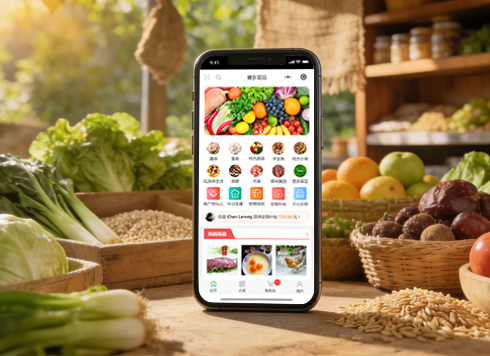 Anhui Huixiang Vegetable Garden Agricultural Products Mini Program v2.0 Iteration Development
HuiXiang MiniApp V2.0: Upgraded homepage, n ...
-
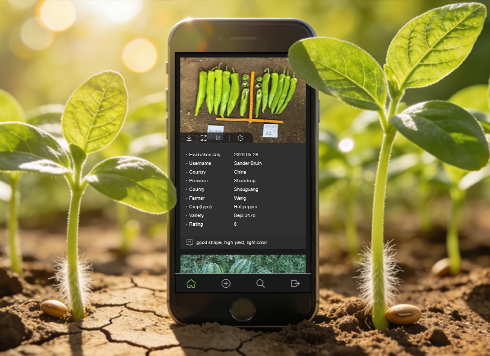 Kunshan TrialBook Mini-Program Custom Development
This project developed an English-only Tria ...
-
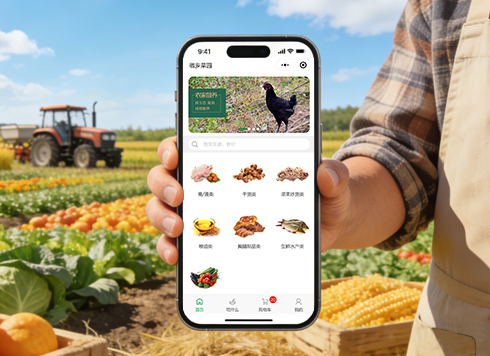 Agricultural Products WeChat Mini Program Custom Development
Lvran Di enhances agricultural sales via a ...
-
Mini Program Code Is in Testing but the Filing Has Not Been Approved: Must We Wait, or Can We Submit for Review First?
Date: Oct 14, 2026 Read: 8
-
User copies the order number, but pasting in WeChat still shows the last one — is switching the button to a popup really necessary?
Date: Oct 13, 2026 Read: 13
-
Store tablet logged in with a different WeChat account, but the Mini Program still shows the previous salesperson's coupon — is a restart required to switch accounts?
Date: Oct 12, 2026 Read: 25
-
Refund shows as completed in the mini program but the bank card has no credit — which step is missing?
Date: Oct 11, 2026 Read: 18
-
A user spent 20+ minutes filling out an expense form in a mini program, then tapping submit bounced back to the login page — is the login session expired or was the form never saved?
Date: Oct 10, 2026 Read: 29