





In custom website development, fonts and images are sourced online — should each license be checked before 2026 delivery?
In custom website development, copyright risks around fonts and images rarely come from 'whether they were used' but mostly from 'whether a commercial license was obtained.' Based on project delivery experience, fonts are more likely than images to be pursued: font files are embedded in CSS, font names appear in font-family declarations, and external verification does not require complex evidence gathering. Images, by contrast, mostly rely on manual comparison, so the probability of triggering a dispute is relatively lower. The criterion is actually simple—before launch, can you clearly explain for every asset 'where it came from, what the license scope is, and whether it can be used commercially'? For parts that cannot be clarified, it is advisable to replace them with assets that are clearly commercially licensed before delivery. In 2026, terms from content platforms and stock asset platforms are still being adjusted, and item-by-item confirmation is more cost-effective than post-event remediation.
Why fonts are more likely than images to be 'called out'
The threshold for holding someone accountable over fonts is low because fonts inherently carry searchable characteristics. Once a web page uses third-party commercial fonts, the font files are usually packaged into the static resource directory, and the font names also appear in CSS declarations. The verifying party can determine this without obtaining the source code. Images are different: to confirm ownership of an image, it often requires manual comparison of the original image and license records, which costs more. This is why many companies receive notices about fonts first, not images.
But this does not mean images are safe. Product images, portraits, illustrations, map screenshots, and film/TV screenshots often involve both copyright and portrait rights, making them more troublesome to handle. This is especially true for images saved directly from WeChat official accounts, competitor websites, or search engine image results—the source chain is nearly impossible to trace. Once the other party asserts rights, it is very difficult for the company to prove it has a license.
- System fonts: Generally licensed for use with the operating system; before using them on a web page, it is still advisable to confirm the license scope.
- Third-party commercial fonts: Commonly priced separately for desktop, web, and app; web usage needs separate confirmation of whether it is included.
- Free stock library assets: License agreements vary widely; some require attribution, and some restrict commercial promotion and redistribution.
- Icon libraries and icon fonts: Free versions often have attribution requirements or usage quantity limits; commercial projects should read the terms carefully.
- Video and background music: Easily treated as something 'no one cares about,' but they also involve licensing.
Three common types of asset sources at delivery, with different risks
Classifying by 'who provides the assets' is easier to implement than classifying by file format, because responsibility attribution and verification paths differ. At the visual draft stage, everyone focuses on the effect, and few people mark the license status next to the file. Waiting until a problem arises to trace back costs much more.
- Client-provided assets. Images exported by the client from an old website, brochures, or exhibition materials often require tracing the license chain one level up. Before delivery, ask the client to confirm in writing that these assets can be used commercially; otherwise, responsibility for revisions or image replacement easily falls on the developer.
- Designer-selected assets. Images downloaded from stock sites, generated by AI tools, or taken from free libraries need their license type confirmed one by one. Platform terms for AI-generated content in 2026 are not unified; some explicitly allow commercial use, while others are vaguely worded. It is advisable to keep generation records and screenshots of the terms page.
- Assets introduced during development. Icon libraries, font files, map components, analytics scripts, and customer service plugins are usually introduced casually during development and are easily left off the license list.
In display-oriented projects with tight budgets and short timelines, a common situation is this: the client sends packaged product images from their WeChat official account, the designer adds a few images from stock sites, and the developer lays out according to the visual draft and launches—neither party confirms licenses item by item. The constraints are that the launch date cannot move and the asset volume is large. The approach is to add a round of source registration at final draft, prioritizing confirmation of fonts and images on the first screen and product pages. The result is about half a day extra for verification, but it avoids post-launch image replacement rework. The cost of skipping this step has a typical range of several days to one or two weeks of delayed tracing and replacement, and it can also miss the originally planned promotion milestone. The tighter the schedule, the more worthwhile it is to spend half an hour registering asset sources at final draft.
What should you check before launch? A verifiable asset licensing checklist
This checklist is not complicated; the key is to expose items that cannot be clarified in advance. It is advisable to do it once after visual finalization and once before launch. Comparing the two results will show whether unregistered assets have been added.
- List all non-system fonts, recording the font name, source channel, license type (desktop, web, other), and commercial use scope.
- List all bitmaps, illustrations, icons, and videos, noting the source link, download time, and key points of the license agreement.
- Separately verify AI-generated assets, keeping the generation platform, generation time, and screenshots of the terms page.
- For client-provided assets, ask the client to confirm in writing that they can be used commercially; email or a contract attachment is fine.
- Create a licensing list and archive it with the delivery documents, so that later maintenance by someone else can pick up.
What counts as qualified? For every asset, you can answer 'source, license scope, commercial use' in three sentences. If any item cannot be answered, treat it as pending replacement. Do not launch first with the mentality of 'it should be fine.' When evidence is needed, check item by item against the original license agreement of the asset platform and the company's internal delivery acceptance checklist.
Trade-offs among several licensing methods
There is no unified answer for licensing methods; it mainly depends on asset volume, duration of use, and brand requirements. The following comparison is organized by common experience ranges. Specific prices vary with the number of accounts, asset scope, and license duration. Before negotiating, it is advisable to ask the other party for a written description of the license scope.
- Free commercial stock libraries: Cost is near zero, suitable for scenarios with large image volume and low uniqueness requirements; pay attention to agreement differences—some require attribution, and some restrict resale and redistribution.
- Annual subscription stock libraries: Common annual fees for enterprises range from a few thousand to ten or twenty thousand yuan (experience range), suitable for teams with long-term content update needs.
- Single-image buyout or per-use licensing: Suitable for a small number of key visuals, such as hero images or brand key visuals, where ownership is relatively clear.
- Commissioned original work or custom fonts: Cost is significantly higher than the previous options, with a wide common range, suitable for companies with high brand visual requirements that are also concerned about future disputes.
If the budget is limited, a pragmatic order is: first replace commercial fonts and high-risk images that appear on the first screen and core pages, then gradually handle long-tail pages. This way, even if it is not fully addressed for the time being, the risk in the main exposure positions is reduced, and the rest can be completed in batches quarterly.
Applicable scenarios and boundaries
Strictly verifying asset licenses is suitable for sites that are externally displayed and serve customer acquisition or brand functions, especially official websites and marketing pages containing product images, portraits, and brand fonts. Such pages have high traffic and a high probability of being searched and compared, so they are worth the investment. Based on website building and design implementation experience, the cost of verifying fonts and images is usually far lower than the cost of handling disputes afterward.
Conversely, internal test sites, temporary campaign pages, and purely internal back-end systems usually do not need item-by-item verification by the same standard, but it is still advisable to avoid using assets with obviously problematic sources. Another situation that can be simplified is when the website itself does not use third-party commercial fonts, and all images come from the client's own photography or commissioned original work. In this case, the checklist can be compressed, and the focus is on verifying whether the client's authorization documents are complete.
Frequently asked questions
If a website is notified of font infringement after launch, how is it usually handled?
A common practice is to replace the font in question with a commercially licensed or system font as soon as possible, take down related assets, and then communicate with the other party about licensing or settlement. The earlier it is handled, the more room for negotiation there usually is.
Can images downloaded from free stock libraries definitely be used commercially?
Not necessarily. Free stock library license agreements vary widely; some require attribution, and some prohibit commercial promotion or resale. Check the specific terms before downloading and keep a screenshot of the license page.
For images provided by the client, who bears the copyright responsibility?
According to common delivery practices, client-provided assets should be confirmed by the client as licensed, and the contract should specify responsibility attribution. Otherwise, once a problem arises, the developer can easily be drawn into the dispute.
Can AI-generated images be used on an official website with confidence?
In 2026, platform terms for commercial use of generated content are still not unified; some explicitly allow it, while others are vaguely worded. A safer approach is to choose a platform with clear terms and keep generation records.
How much does web font licensing generally cost?
Common pricing is annual or per-site, with a wide range from several hundred to several thousand yuan (experience range), depending on the font foundry and license scope. First confirm whether web licensing is included, then discuss the price.
If the official website is already live, it is recommended to spend half a day doing an asset source inventory first: list the fonts and images used on the first screen and core pages, and confirm their license status. This step mostly does not require an extra budget—just someone to go through it once. If the website is about to be delivered, the licensing list can be included in the acceptance materials. Confirm clearly in advance with teams like Xiyue Company that follow project delivery practices, so that later maintenance by someone else will be easier to hand over. Internal systems or temporary pages can be handled by simplified standards.
-
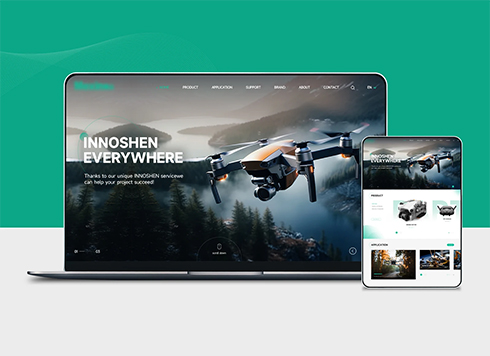 Drone Accessories Company Website Development
Incorporating gray as an accent with the pr ...
-
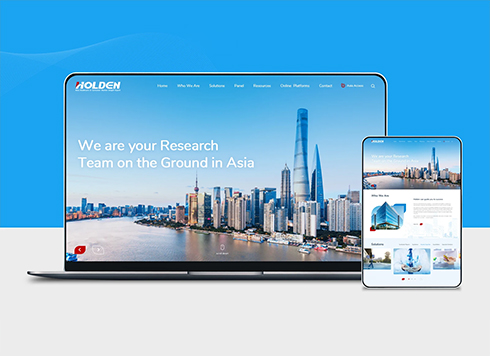 Professional International Research Service Agency Website Construction
This project serves a company with internat ...
-
 The Construction of Group Websites for Asset Operation and Digital Services
This project is to create a website for a c ...
-
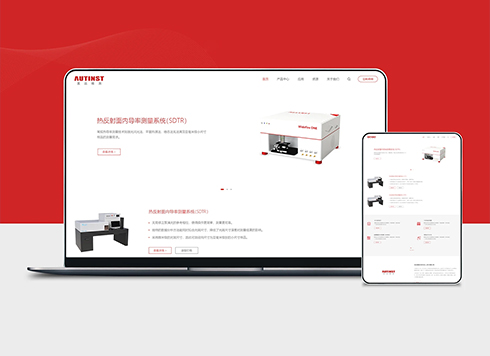 Thermal Test Equipment Website Construction
Founded in 2022, this tech company focuses ...
-
Custom website redesign: old links all 404 — is it worth redirecting them one by one?
Date: Sep 12, 2026 Read: 8
-
Custom Website Development: Mobile Layout Is Messy—Can You Approve It for Launch During Acceptance?
Date: Sep 11, 2026 Read: 14
-
If no one maintains the website, is a backup still worth it?
Date: Sep 10, 2026 Read: 22
-
How Long Does Domain ICP Filing Take for a Custom-Built Website? Can It Go Live Before Filing Is Approved?
Date: Sep 9, 2026 Read: 35
-
Custom website loads slowly after launch: is it a server or code problem? What to check first?
Date: Sep 8, 2026 Read: 39