
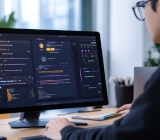


Custom Website Development: Addressing Enterprise Needs That Generic Templates Fail to Meet
Enterprise official websites have evolved from mere "network business cards" into core carriers for brand display, business conversion, and user services. However, many enterprises fall into the "template dilemma" when building websites—while generic templates are convenient and low-cost, they struggle to match an enterprise's unique brand tone, business logic, and development needs. At this point, custom website development, with its high adaptability, becomes the key solution to this problem, creating truly tailored digital tools for enterprises.
The "Ceiling" of Generic Templates: Four Major Pain Points of Enterprise Needs
Generic template-based website building is marketed as "ready to use out of the box", but the contradiction between its standardized nature and enterprises' personalized demands has become increasingly prominent, gradually revealing insurmountable limitations, mainly concentrated in the following four aspects.
First, lack of brand recognition. The visual design, color matching, and layout structure of templates are mass-produced, with many enterprises sharing similar frameworks, leading to a "one-size-fits-all" look for websites. Whether it’s the professional rigor of high-end manufacturing or the creative vitality of cultural and creative enterprises, neither can be accurately conveyed through templates; instead, it blurs the enterprise's brand image and reduces users' brand recall.
Second, disconnection between functions and business. Template function modules are fixed, mainly focusing on basic functions such as news release and product display, failing to meet enterprises' special business needs. For example, cross-border e-commerce enterprises require multilingual switch and integration of international payment gateways; manufacturing enterprises need custom query of product parameters and order progress tracking systems; service-oriented enterprises demand online reservation and intelligent customer service docking—these core business functions are often "blind spots" for generic templates.
Third, insufficient scalability restricting development. Enterprises are in dynamic development, and website needs will upgrade with business expansion—from initial display-oriented websites to later marketing-oriented ones, and then to intelligent websites integrated with CRM and ERP systems. The fixed architecture of generic templates cannot support the addition and upgrade of functions. Forcibly modifying templates not only easily causes website crashes but also incurs high secondary development costs, becoming a "stumbling block" for enterprises' digital transformation.
Fourth, prominent security and adaptation risks. The code of generic templates is open-source and lacks targeted optimization, prone to vulnerabilities that leave security risks such as hacker attacks and data leaks. Meanwhile, some templates have poor adaptation effects on different browsers and mobile devices, which may lead to page disorder and slow loading, affecting user experience and even missing potential customers.
Custom Development: An "Exclusive Solution" for Precisely Matching Enterprise Needs
Centered on enterprise needs, custom website development involves full customization from architecture design and visual presentation to function development. Through a "tailor-made" approach, it accurately addresses the pain points of generic templates, creating websites for enterprises that combine brand value, functionality, and growth potential.
In terms of brand integration, custom development achieves "vision is brand". The development team will deeply interpret the enterprise's brand philosophy, VI system (Visual Identity System), and target user personas, integrating brand elements into every detail of the website—from the placement of the Logo and selection of the main color palette, to font matching and image style, and even page transition animations, all are highly consistent with the enterprise's brand tone. For instance, websites of luxury enterprises convey a high-end and luxurious brand positioning through minimalist and elegant layouts, high-definition textured images, and graceful motion design; tech enterprises highlight their innovative strength with clean lines, tech-inspired color schemes, and interactive function modules, making the website a "digital extension" of the brand image.
In function development, custom development achieves "full business adaptation". The development team will communicate deeply with the enterprise about business processes, sort out core and potential needs, and build an exclusive functional architecture. For e-commerce enterprises, it can customize a multi-dimensional product filtering system, personalized recommendation algorithm, and transaction system integrating multiple payment methods; for educational institutions, it can develop integrated functions such as online course playback, learning progress tracking, examination and evaluation, and student management; for group enterprises, it can build a multi-subsite association system to realize data interconnection and unified management. This "on-demand development" model ensures seamless connection between website functions and business processes, improving operational efficiency and user conversion rates.
In scalability, custom development constructs a "growth-oriented architecture". Based on the enterprise's development plan, the development team designs the website with a modular and scalable technical architecture, reserving sufficient functional interfaces. When the enterprise's business expands, only new modules need to be added to the original architecture to achieve function upgrades. For example, when upgrading from a display-oriented website to a marketing-oriented one, SEO optimization modules, online form systems, and data analysis tools can be quickly integrated; when docking with third-party systems, seamless integration with CRM, ERP, logistics systems, etc., can also be realized through reserved interfaces, avoiding repeated development and reducing upgrade costs.
In terms of security and adaptation, custom development builds an "all-round guarantee". The development team adopts native code development to reduce redundant code and security vulnerabilities, and at the same time ensures website data security through measures such as data encryption, permission management, and regular security checks. In terms of adaptation, responsive design is adopted to ensure the website presents the best effect on different devices such as PCs, mobile phones, and tablets, adapting to all major browsers and enhancing user experience. In addition, custom development also provides exclusive post-maintenance services, responding promptly to needs such as website failures and function optimization, ensuring the long-term stable operation of the website.
The Practical Value of Custom Development: From Cost Input to Value Output
Compared with the "low-cost entry" of generic templates, custom development requires a higher upfront investment, but in the long run, the value it brings far exceeds the cost input. On the one hand, a custom website precisely matches enterprise needs, avoiding problems such as low operational efficiency and customer loss caused by insufficient template functions, directly improving business conversion effects; on the other hand, its good scalability and stability reduce the cost of later secondary development and maintenance, providing long-term support for enterprises' digital transformation.
Take a high-end equipment manufacturing enterprise as an example. Previously, it used a generic template website that only simply displayed product pictures and parameters, failing to meet customers' needs for custom product query, technical solution download, and online consultation, resulting in a high customer churn rate. After custom development, the website added a custom product parameter filtering system, 3D product display module, technical solution library, and online engineer docking function. This not only improved customer query efficiency but also realized a closed loop of "demand - docking - conversion". Website inquiries increased by 60% and customer conversion rate rose by 35%, fully demonstrating the value of custom development.
Conclusion: Choose Custom Development to Build Enterprises' Digital Core Competitiveness
In today's increasingly fierce digital competition, websites have become an important part of enterprises' core competitiveness. While generic template-based website building can meet the basic need of "having a website", it cannot support enterprises to achieve the value goal of "having a good website". Through in-depth brand integration, precise business matching, and reserved growth space, custom website development creates exclusive digital tools for enterprises. It not only solves the personalized needs that generic templates cannot meet but also helps enterprises establish a unique brand image in the digital wave, improving operational efficiency and market competitiveness.
For enterprises with long-term development plans, custom website development is not an "extra expense" but a "strategic investment" in building digital core competitiveness—the brand value, conversion effects, and growth potential it brings will become an important support for enterprises to stand out in market competition.
-
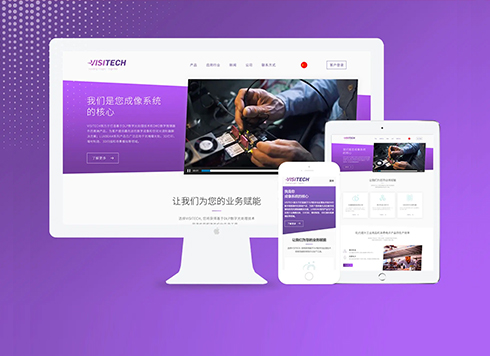 Building Websites for High-End Imaging System Enterprises
The company focuses on high-end imaging sys ...
-
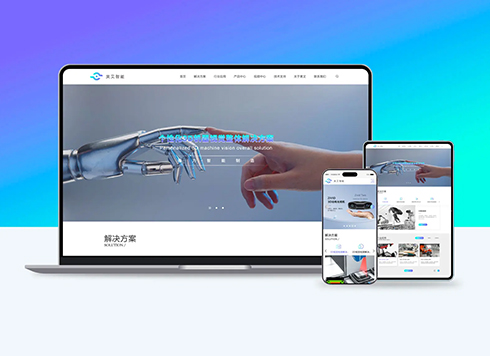 Website Development for 3D Machine Vision Equipment Companies
Our company offers 3D machine vision soluti ...
-
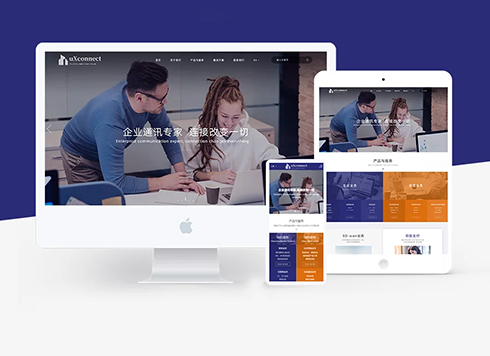 Customized Communication Solutions for Enterprises Website Development
Founded in 1996, this company focuses on pe ...
-
 New Air System Enterprise Website Construction
We launched a high-end fresh air system web ...
-
Custom website development: the site has fewer than a hundred pages, the client insists on adding site search, operations says it's unnecessary — should we push back first?
Date: Oct 14, 2026 Read: 9
-
Custom Website Development: Should Official Site Whitepapers Download Directly or Require a Phone Number First? Sales and Operations Are Arguing—Whose Call Wins?
Date: Oct 10, 2026 Read: 26
-
Custom website development: when a client wants live chat on the corporate site, should you embed third-party code first or build it in-house?
Date: Oct 9, 2026 Read: 28
-
In custom website development, the client finds the official site awkward on mobile—should we fix responsive design first or build a separate mobile version?
Date: Oct 7, 2026 Read: 46
-
Custom Website Development: If the Site Form Collects Phone Numbers, Does the Privacy Policy Really Need to Be Posted?
Date: Oct 5, 2026 Read: 50