


With a Limited Budget, How to Plan Your First Custom Mini-Program Project?
Mini Programs (MPs) have become the top choice for numerous enterprises and individual merchants to expand their businesses, thanks to their advantages of low cost and high reachability. However, for entrepreneurs or small and medium-sized enterprises (SMEs) with limited budgets, the first MP customization project is often fraught with confusion: how to strike a balance between "spending less" and "getting things done well" while meeting core needs and strictly controlling costs? This article will provide a practical planning solution from multiple dimensions such as demand sorting, development method selection, and resource integration.
I. Precise Positioning: Lock Core Needs with "Subtraction Thinking"
The core contradiction of limited budgets lies in the conflict between "unlimited needs" and "limited funds". When launching an MP project, many people tend to fall into the misunderstanding of "pursuing comprehensive functions", piling up various ideas, which ultimately leads to soaring development costs and extended cycles. Therefore, the first step in planning must be to "do subtraction" and accurately lock in core needs.
First, clarify the project objectives. Is your MP used for brand display, online transactions, customer service, or event promotion? Different objectives correspond to different core functions. For example, the core needs of catering merchants may be "online ordering + order management + verification", while consulting institutions may need "content display + form appointment + customer service communication" more. Materialize the objectives and avoid vague expressions. For instance, "improving customer experience" can be broken down into actionable needs such as "reducing customer waiting time for consultations" and "simplifying the appointment process".
Second, distinguish between "essential functions" and "value-added functions". Create a requirements list and mark the "necessity" of each function as "must-have", "addable later", or "optional". Essential functions are the foundation supporting the core value of the MP, such as "product display, adding to cart, and payment" for e-commerce types; value-added functions are supplements to enhance the experience, such as "membership points, sharing fission, and personalized recommendations". With a limited budget, priority should be given to meeting essential functions, and value-added functions can be added in subsequent version iterations.
Finally, research the habits of target users. Understand users' core pain points through questionnaires, interviews, etc., and avoid developing functions that are "considered useful by oneself" but unused by anyone. For example, an MP targeting the middle-aged and elderly groups does not need to over-pursue fancy animation effects; a concise operation interface and clear guidelines are more important. This can not only reduce development costs but also improve user retention.
II. Scientific Selection: Choose a Cost-Effective Development Method
The development method directly determines the core cost of the project. With a limited budget, blindly choosing customized development often exceeds expectations. At present, the mainstream MP development methods are divided into three categories: "fully customized development", "template development + secondary customization", and "SaaS tool building". It is necessary to match the most suitable mode according to the needs.
Fully customized development is suitable for projects with unique needs and complex functions. Its advantage is that it fully aligns with business logic, but the cost is extremely high (usually starting from tens of thousands of yuan), and the development cycle is long (1-3 months). It is only recommended for enterprises with special core competitiveness. For the first MP project, if there are no irreplaceable functional requirements, it is recommended to exclude this option first.
Template development + secondary customization is the "optimal solution" for limited budgets. Mature MP templates on the market cover multiple industries such as catering, e-commerce, and education, and include basic core functions. Enterprises only need to carry out secondary development based on their own needs, such as modifying the interface style and adding specific functional modules. The cost of this method is usually between several thousand yuan and ten thousand yuan, and the development cycle is shortened to 1-2 weeks, which can not only ensure a certain degree of customization but also effectively control costs. When choosing a template, attention should be paid to its scalability to avoid difficulties in subsequent iterations.
SaaS tool building is suitable for startups with minimal needs, such as enterprise official website-style MPs that only need to display information and simple appointment forms. Such tools (e.g., the template library in the WeChat Mini Program Developer Tool and third-party SaaS platforms) provide visual drag-and-drop functions, allowing construction without coding foundation, with costs as low as several hundred yuan or even free. However, the disadvantage is that the functions are fixed, the degree of customization is low, and it is difficult to meet complex business needs.
III. Detail Control: Avoid Hidden Costs from Requirements Documents to Contracts
The cost overrun of many projects does not stem from core development but from hidden communication costs, revision costs, and risk costs. With a limited budget, it is even more necessary to avoid these problems through detail control.
First, write a clear Product Requirements Document (PRD). A PRD is not only for professionals; the core is to transform "functional requirements" into "executable descriptions". For example, instead of just writing "develop an ordering function", specify that "users can browse by dish category, modify the quantity after adding to the cart, choose in-store pickup or delivery when submitting an order, and need to fill in the delivery address and contact number for delivery". At the same time, reference cases (such as liking the interface style of a certain MP) can be attached to reduce the understanding deviation of the development party. A clear PRD can greatly reduce the frequency of subsequent revisions and avoid additional costs due to "demand changes".
Second, select a reliable development team/service provider. Avoid only looking at "low prices" and prioritize investigating the other party's industry cases, reputation, and after-sales service. You can ask the other party to provide a "phased delivery" plan, such as conducting tests after completing core functions and confirming that they meet the requirements before proceeding with subsequent development, to avoid difficulties in safeguarding rights after one-time payment. In addition, clarify the scope of after-sales service, such as the deadline for fixing bugs after launch and whether basic server maintenance is included, to avoid additional fees for small problems later.
Finally, sign a detailed contract. The contract should clearly specify key information such as the development scope, function list, development cycle, cost details (e.g., whether domain name, server, and MP certification fees are included), payment method, and charging standards for demand changes. In particular, the "demand change clause" should stipulate that "minor demand adjustments are not charged extra, and major changes are negotiated based on the actual workload", to avoid disputes later.
IV. Resource Integration: Leverage Existing Tools to Reduce Additional Costs
In addition to core development costs, MP development also involves additional costs such as domain names, servers, certification, and payment interfaces. With a limited budget, these expenditures can be reduced through resource integration.
For domain names and servers, if the needs are simple (e.g., display-type MPs), cost-effective cloud servers can be chosen, such as entry-level servers from Alibaba Cloud and Tencent Cloud, with a monthly cost of only tens of yuan; some SaaS development platforms or template service providers also offer free domain names and basic servers, which can be prioritized. The MP certification fee is 300 yuan per year (charged by WeChat official). If the enterprise has already certified an Official Account, it can quickly certify the MP through the Official Account without repeated payment.
For functional modules, priority should be given to using free tools within the WeChat ecosystem or mature third-party plug-ins. For example, customer communication can access "WeChat Work Customer Service" without developing a separate customer service system; marketing functions can use WeChat's built-in "coupon" and "group buying" tools, or choose low-cost third-party marketing plug-ins (e.g., some plug-ins charge per use rather than an annual fee); data statistics can directly use the "data analysis" function in the WeChat MP background without developing an additional data dashboard.
In addition, internal team resources can be leveraged. If there are personnel in the team who understand basic design, they can create materials such as logos and interface images by themselves, avoiding costs from outsourced design; organize internal staff to conduct tests before launch, collect problems and feed them back centrally, reducing the testing costs of the development party.
V. Iterative Thinking: Launch the "Minimum Viable Product (MVP)" First, Then Optimize Gradually
With a limited budget, avoid pursuing "perfection in one step". The core logic of Internet products is to "launch quickly, verify needs, and iterate and optimize", and MPs are no exception. It is recommended to first develop a "Minimum Viable Product (MVP)"—a version that includes core functions and can meet users' basic needs. After launch, add value-added functions gradually based on user feedback and data performance.
For example, a startup bakery can first launch core functions such as "product display (classification of cakes and bread) + online ordering (supporting in-store pickup) + contact information" for its first MP, with the budget controlled within several thousand yuan. After launch, by observing data such as users' order frequency and popular products, if it is found that users have delivery needs, add the delivery function; if the user repurchase rate is high, develop a membership points system. This iterative model can not only reduce the initial investment but also make the product more in line with user needs, avoiding resource waste caused by redundant functions in the early stage.
Conclusion: With a Limited Budget, the Core is to "Spend Money Where It Counts"
For the first MP customization project, a limited budget is not a "stumbling block" but rather forces enterprises to focus on core needs and improve project efficiency. The core logic of planning is: lock in needs with "subtraction thinking", control costs with a "cost-effective model", avoid risks with "detail control", and achieve long-term value with "iterative thinking". As long as the objectives are clear, the selection is scientific, and the execution is precise, even with a limited budget, a practical MP that meets business needs can be created, taking a solid first step for digital transformation.
-
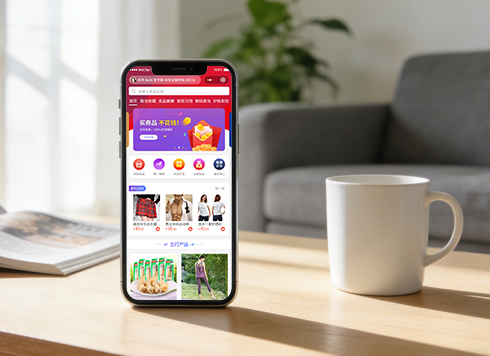 Well-Recognized Custom E-Commerce Mall System Dev
The Good Shopping mini-app is natively buil ...
-
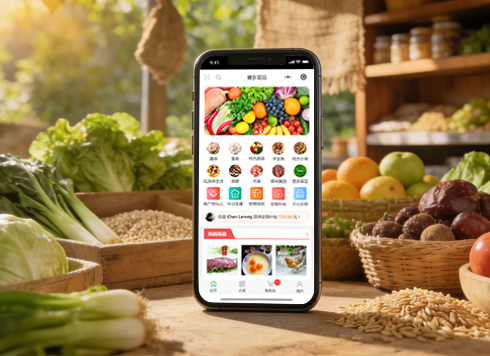 Anhui Huixiang Vegetable Garden Agricultural Products Mini Program v2.0 Iteration Development
HuiXiang MiniApp V2.0: Upgraded homepage, n ...
-
 Kunshan TrialBook Mini-Program Custom Development
This project developed an English-only Tria ...
-
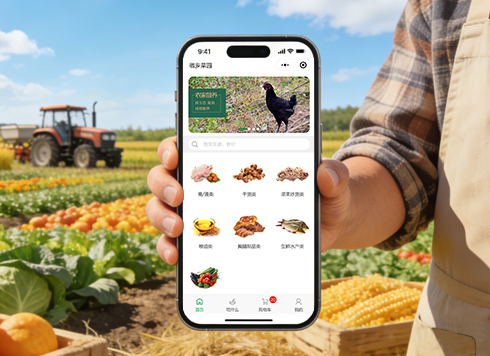 Agricultural Products WeChat Mini Program Custom Development
Lvran Di enhances agricultural sales via a ...
-
Mini Program Code Is in Testing but the Filing Has Not Been Approved: Must We Wait, or Can We Submit for Review First?
Date: Oct 14, 2026 Read: 8
-
User copies the order number, but pasting in WeChat still shows the last one — is switching the button to a popup really necessary?
Date: Oct 13, 2026 Read: 13
-
Store tablet logged in with a different WeChat account, but the Mini Program still shows the previous salesperson's coupon — is a restart required to switch accounts?
Date: Oct 12, 2026 Read: 25
-
Refund shows as completed in the mini program but the bank card has no credit — which step is missing?
Date: Oct 11, 2026 Read: 18
-
A user spent 20+ minutes filling out an expense form in a mini program, then tapping submit bounced back to the login page — is the login session expired or was the form never saved?
Date: Oct 10, 2026 Read: 28